Windhoek, Namibia — Pioneering Circular Economy
Namibia's first dedicated end-of-life tyre recycling facility.
Circunomics™ is a Namibian green industrial venture building the infrastructure to recover value from waste tyres — turning a chronic environmental problem into a productive, circular resource.
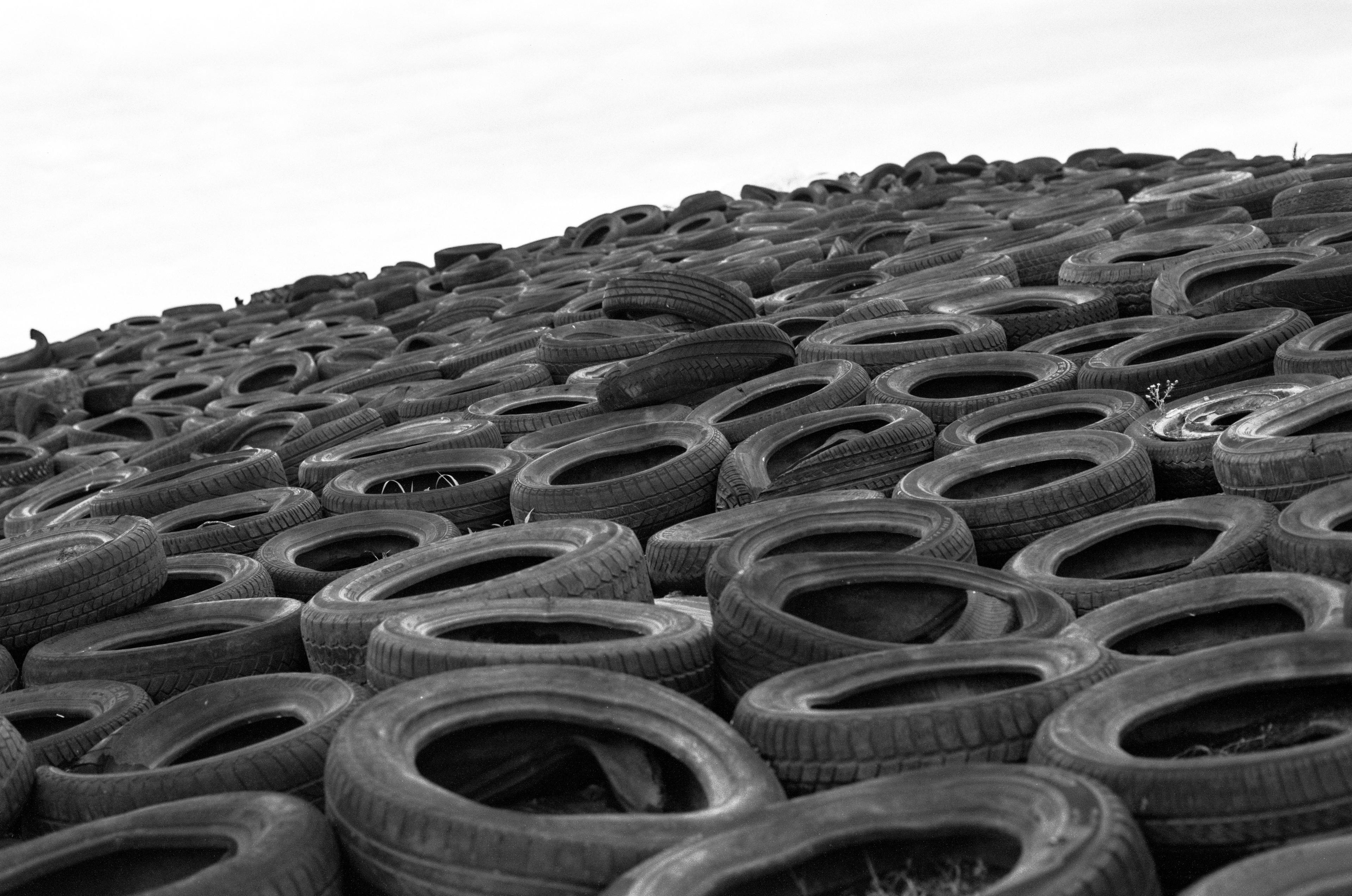
400,000–600,000 end-of-life tyres generated in Namibia annually — zero domestic processing capacity.
The Problem
A growing waste stream with no solution in place.
Namibia generates an estimated 400,000 to 600,000 end-of-life tyres every year. There is no domestic facility to process them. Waste tyres accumulate at municipal dumpsites, along roadsides, and on commercial properties across the country. They breed mosquitoes. They burn — and tyre fires are notoriously difficult to extinguish, releasing toxic emissions into surrounding communities.
They do not degrade. They represent a permanent, growing liability for municipalities, landowners, and the environment. The value locked inside every tyre — rubber, steel, fibre — is either destroyed or exported, unprocessed, to neighbouring countries. Namibia has the waste stream. It does not yet have the solution.
400K–600K
End-of-Life Tyres Per Year
Generated in Namibia annually, with no domestic processing infrastructure and decades of accumulated stock.
100%
Exported for Processing
Of collected recyclable material leaves Namibia unprocessed — every tonne exported is value that should stay local.
0
Domestic Recycling Facilities
No dedicated end-of-life tyre recycling facility exists anywhere in Namibia.
What We Are Doing
Building Namibia's first mechanical end-of-life tyre recycling plant.
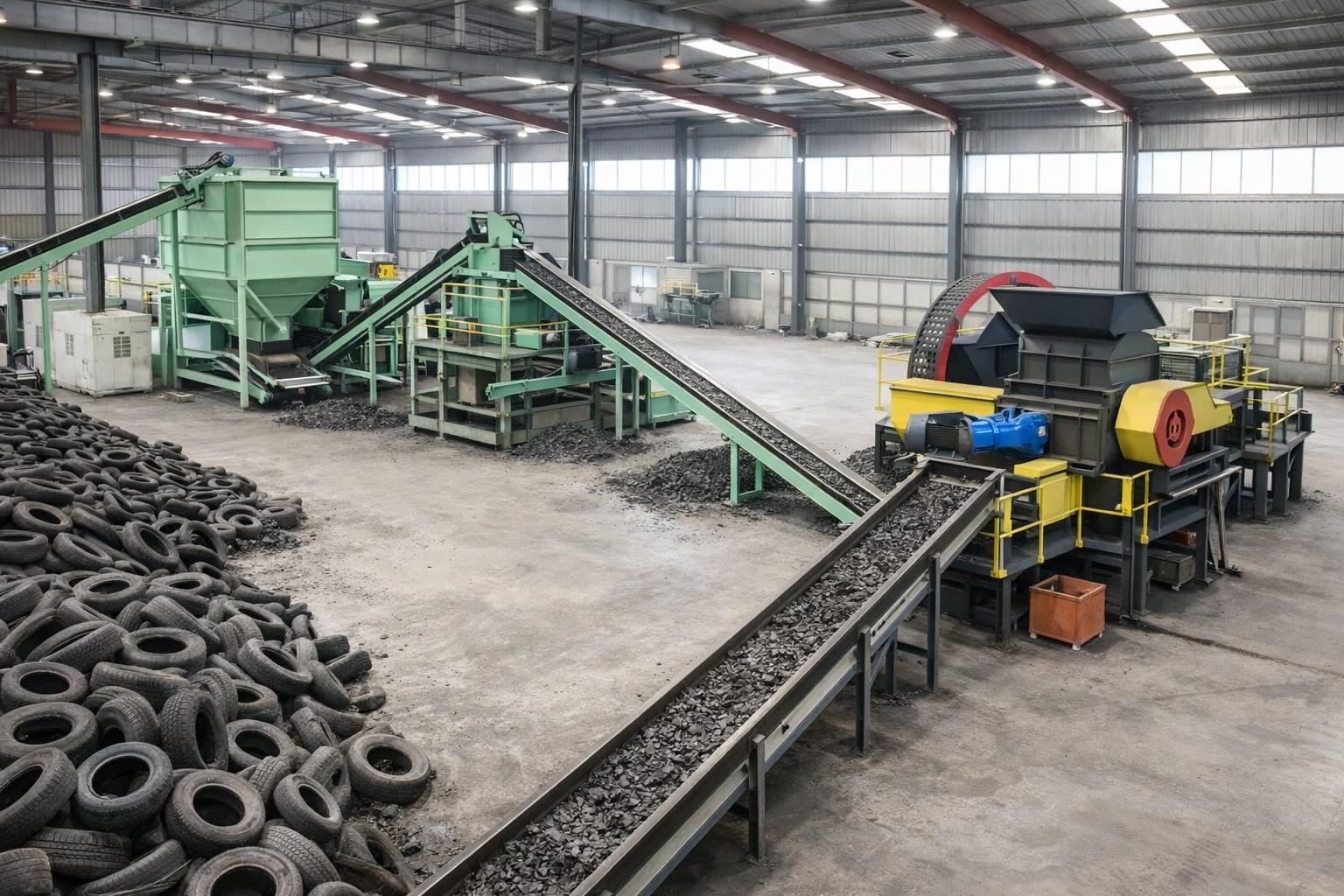
Circunomics™ is establishing a dedicated mechanical end-of-life tyre recycling facility in Windhoek. The facility collects waste tyres from municipal sources and through a cash-for-tyres scheme that directly engages informal sector collectors, waste pickers, tyre workshops, and scrap dealers across the city and surrounding areas.
Every tyre received is processed — not stockpiled, not exported, not burned. The process is fully mechanical. No pyrolysis. No chemical treatment.
Output Products
Crumb Rubber
For road construction, rubberised asphalt, and sports surfaces.
Recovered Steel Wire
For scrap metal markets locally and across the SADC region.
Textile Fibre
For industrial applications.
Our Process
From waste tyre to recovered material.
A fully mechanical process. No pyrolysis. No chemical treatment.
Collection
Tyres sourced from municipal dumpsites and through the cash-for-tyres collector network.
Receiving
Tyres are weighed, sorted by category, and logged at the Windhoek facility.
Shredding
Primary and secondary shredding reduces whole tyres to uniform chips.
Granulation
Chips are processed to crumb rubber granulate. Steel and textile fibre are mechanically separated.
Output
Crumb rubber, recovered steel wire, and textile fibre are dispatched to their respective end markets.
Why This Matters
Environmental outcomes and economic returns — built into the same project.
For Namibia's Environment
Processing waste tyres eliminates the fire risk, the disease vector, and the toxic burden they create when left unmanaged. It diverts material permanently from landfill — extending the operational life of existing municipal waste infrastructure.
For Namibia's Economy
The facility creates direct employment and supports livelihoods through the collector network. It retains material value inside Namibia rather than exporting it as raw waste. It positions the country as a producer of recycled industrial materials for the broader SADC region.
For Namibia's Development Agenda
The project is aligned with Namibia's Vision 2030, its Nationally Determined Contributions under the Paris Agreement, and the national priority of circular economy development. It is the kind of green industrial project Namibia's regulatory and investment environment was designed to support.
“Namibia has the waste stream. It does not yet have the solution. Circunomics™ is building it.”
Get in Touch
We welcome enquiries from all stakeholders.
We are at an active stage of project development. Reach out using the form below.